


‘Prop trading firm’ is a recently widely used term in the financial world, both for traders and financial firms. But only some have a clear idea of what this is. In our community and forum, traders often ask different questions about this.
So, why not analyze this basic term? That’s why here I will go over prop trading firms, their activities, and the benefits and drawbacks. If “prop trading” is still a confusing term to you, our thorough research and user experience-based opinions about prop trading firms and their activities will clear all doubts in your mind.
What is a prop trading firm?
Proprietary trading firms, or ‘prop trading firms,’ are an increasingly popular investment method. Simply put, prop-funding firms allow traders to trade with the firm’s capital, and when a trader generates a profit, prop-funding firms cut his profit and make money. Prop firms allow anyone to sign up as a trader. But they evaluate them based on their trading skills and finally provide funds. Prop firms generally have instruments like Forex ( currency trade), metals, indices, commodities, and crypto pairs.
If someone has trading skills and is interested in trading these instruments, he can make money using funded capital provided by a prop trading firm. But what do firms get out of it? Well, they will gain direct market profit rather than a small commission from traders’ profit. Of course, traders will get their profit split too. On the other hand, it is also risky for prop firms, as they are investing their liquid through traders worldwide. That’s why They evaluate the trader’s skills before funding them. Being a professional trader may be challenging, but there are some prop firms with many opportunities for beginner traders as well.
How do prop trading firms work?
Different proprietary trading firms have different frameworks. After researching and trading with well-known prop firms, we have found some fundamental ways in which they are all the same.
Joining a prop firm as a trader:
To begin working with a prop firm, one must first register as a trader with the company. Anyone who completes a few simple verification processes can become a trader. Some firms have a step verification process, and then some have two. Some firms even provide instant funds to experienced traders. You will need to pay a fee to get access to a firm-funded program. Usually, instant funding has a higher registration fee.
Choosing an account
Different prop firms have different accounts that both new and experienced traders can choose to trade. Depending on a trader’s trading skill, he can select his account type, which the account rules will evaluate.
For example, some prop firms have ‘maximum trading day’ trial opportunities for traders. This signifies that traders have to pass the phase in that time frame. Some firms have a different time frame.
Evaluation process and funding:
Prop companies follow a specific structure to evaluate the traders before giving them a funded trading account. Sometimes, they construct an evaluation strategy consisting of two to three evaluation phases. When a trader’s skill is up to par and the firm’s officials verify the result, then the trader’s account will be funded by the prop firm.
Agreement:
When the trader passes the evaluation process, they agree with the firm. Then, they will get a profit percentage from the firm for the profit they gain from the trade. Profit Split differs from company to company (for example, from 60% to 90%). Once all the paperwork is done and the trader is eligible for funding, it’s the trader’s turn to make it happen. Prop firms have many payment and withdrawal options (like bank transfers, PayPal, crypto-currencies, and so on). So you don’t have to worry about the payment process.
Tradable assets:
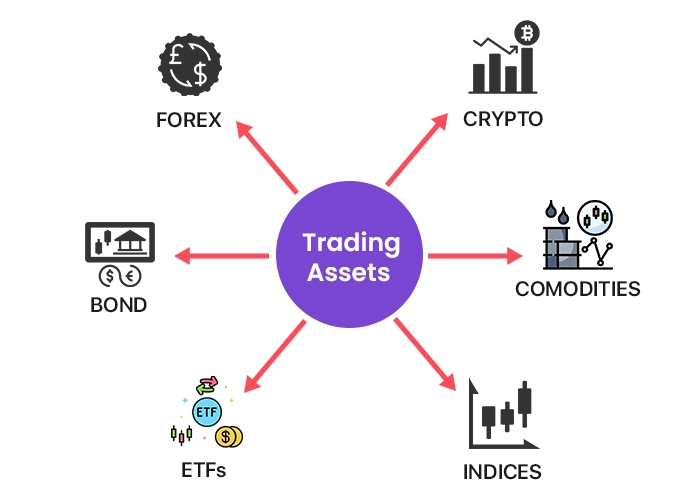
A trader can trade commodities, metals, stocks, bonds, cryptocurrencies, fiat currencies, and other financial instruments on the Prop platform. You can easily pick the one that suits your trading expertise the best.
A trader can decide which firm is right for him by looking at all the essential rules and goals and the funding process, fees, and profit splits. We have listed some criteria based on our experience.
Benefits of prop trading firms
The key benefits of prop trading are sorted out as follows:
Trade from anywhere:
Prop traders can trade from any location anytime if they have only a reliable internet connection. Trading through a prop firm allows a trader to trade when and where he wants.
Risk minimization:
With a prop firm, a trader doesn’t have to invest much money, just the registration fee. This means there is less risk of losing a lot since prop firms give you their funds to trade. Also, prop firms have special trading tools that help their traders figure out how much risk they take in a trade and how to handle it.
The possibility of big profits:
In a prop firm, there is a chance of large profits. Some Firms offer up to 90% profit.
Profit from uncertainties:
One of the most important ingredients for success in prop trading is forecasting. Though it is a hard skill to grasp, one can achieve it with hard work and dedication.
Prop trading allows a trader to profit from economic and political uncertainties.
Loss management
Some prop firms allow a prop trader to purchase an account for a minimal cost, where he will be funded with a big deposit for trading. It is obvious that the more a trader earns from trading, the less likely he is to lose his capital after a certain trading period.
(For example, if a trader has only $200 to trade, he can purchase an account from any renowned prop firm, where he may deposit up to $25,000 to trade with. Now it is easy to understand that he is now more relaxed with minimizing the risk of losing all of his $200)
The possibility of scamming is low:
If a trader picks a prop trading firm carefully, there is almost no chance that they will be scammed.
Trader-oriented support team:
Prop firms have a support team for traders. Support teams are dedicated to prop traders, which makes it easier for prop traders to trade with a prop firm’s increased capital instead of retail trading. Apart from this, some firms have in-house trading experts, tools, and other materials for prop traders.
Drawbacks of prop trading firms:
However, there are some drawbacks, though that is only a handful. I have talked to many traders regarding this issue. So, from my experience and their comments, I have found some setbacks in prop firms.
- Prop firms are not as regulated as retail brokers.
- The evaluation process might be tough for new traders
Conclusion
Proprietary trading firms trade for themselves, using the traders’ trading skills. They only fund traders with trading experience for the firm’s long-term profitability. But in doing so, prop trading firms offer traders an excellent opportunity to trade from anywhere and make a handsome, stable cash flow. So, if you want to get into this profession, choose a good prop firm and start trading.

Roger Schultz is a finance graduate and seasoned trading analyst with 5+ years of experience. His articles and analyses are known for their clarity, depth, and practicality, making complex trading concepts accessible to traders of all levels. He's dedicated to delivering valuable insights that help traders navigate the ever-evolving trading landscape. Trust his expertise for your trading journey. Connect with Roger Schultz to stay updated on the latest Forex trends, strategies, and insights at Prop Ratings.